Bill Clinton campaigned for president on a platform that consisted of health care reform in 1992. Similar propositions had actually been made previously, as universal healthcare was likewise part of the platform of Jesse Jackson's failed 1988 governmental bid. Quickly upon showing up in workplace, Clinton established the Task Force on National Healthcare Reform with his spouse Hillary Rodham Clinton functioning as its chair.
The bill met opposition from policymakers, insurance business, and doctor groups, and did not pass. The failure of Clinton's efforts led numerous authorities to view health care reform as a problem too complicated and too contentious to run the risk of losing any political impact over (what is a single payer health care system). In contrast to the Health Security Act, Representative Jim McDermott (D-WA) presented the similarly called American Health Security Act in 1993, which would have developed a single-payer system - how many countries have universal health care.

In the early twenty-first century, state and federal officials showed renewed interest in broadening health care protection. In 2003 Representative John Conyers Jr. (D-MI) initially presented the United States National Medical Insurance Act, which required a single-payer healthcare system, however the expense got neither a dispute nor a vote on the House flooring.
While the federal government took little action towards achieving universal health care, state legislators experienced success at broadening health coverage in Massachusetts in 2006. The Massachusetts system mandated that every citizen acquire medical insurance or pay fines. The system is often called "Romneycare" in reference to Mitt Romney, who functioned as guv throughout its implementation.
The Of Which Type Of Health Care Facility Employs The Most People In The U.s.?
Professionals have actually attributed the success of the Massachusetts system to federal government subsidies, which enabled more individuals to acquire insurance, and to the program's insurance required, which appealed to insurer since they obtained more consumers. In turn, having more individuals add to the fund drove costs down. In 2008 Barack Obama campaigned on healthcare reform in his quote for president, drawing greatly on the Massachusetts design.
The efforts of his administration led to the passage of the Client Protection and Affordable Care Act (ACA), also referred to as "Obamacare," in 2010. According to the Centers for Disease Control and Avoidance, the portion of Americans who did not have medical insurance dropped from 16 percent in 2010 prior to the law went into result to 8.6 percent in the last months of Obama's presidency.
Additionally, some critics thought about the overhaul of the health care system insufficient, competing that a single-payer system would much better serve the population. Vermont senator Bernie Sanders, whose 2016 governmental bid stressed health care reform, introduced the Medicare for All Act of 2017, a proposal to broaden government health coverage to all citizens and homeowners.
Amongst the expense's cosponsors, Senators Cory Booker (D-NJ), Kamala Harris (D-CA), Kirsten Gillibrand (D-NY), Elizabeth Warren (D-MA), and Sanders himself all signed up with the field of competitors for the Democratic Celebration's 2020 governmental nomination. In July 2018 more than seventy Democratic members of the Home of Representatives formed the Medicare for All Caucus to sponsor briefings on health care reform.
The 2-Minute Rule for Which Countries Have Universal Health Care
As support for a single-payer system has grown among progressive factions within the Democratic Celebration, some critics, consisting of fellow Democrats, have argued that a healthcare system without a function for personal insurance might cause a reduction in quality of service. An often pointed out study performed by researchers at Harvard Medical School and Cambridge Health Alliance in 2009 determined that almost 45,000 Americans pass away each year due to issues connected to their lack of health insurance.
By making sure that residents and homeowners have access to budget friendly medical services, universal healthcare can enhance overall public health by dealing with the sick, promoting preventative care, and supplying standard care to all clients. Critics warn, nevertheless, that universal health care might cause reduced quality of care and long haul times.
In 2018 the choice of England's National Health Service to withdraw life support from toddler Alfie Evans versus the parents' wishes sparked an international argument over how choices are made in a single-payer system. In action to issues over rationing, some medical specialists and financial experts assert that rationing exists in all health care systems because resources are constantly restricted.
Disparities in medical treatment throughout the United States likewise recommend that access to medical services can be based on where patients live and where they are employed along with demographic elements such as race, gender, and ethnic culture. Some healthcare professionals have actually argued that the Medicare system in the United States can be defined as a specific kind of healthcare rationing since the program just offers coverage to people ages 65 or older, individuals with certain impairments, and people with End-Stage Renal Disease.
A Biased View of What Is The New Health Care Plan
Numerous critics of universal health care point out the possible expenses of application as the main factor for their opposition. Some critics of universal health care have voiced issue that a single-payer system would cause people looking for unnecessary treatments which https://what-type-of-drug-is-cocaine.drug-rehab-florida-guide.com/ the overuse of services would drive general costs up.
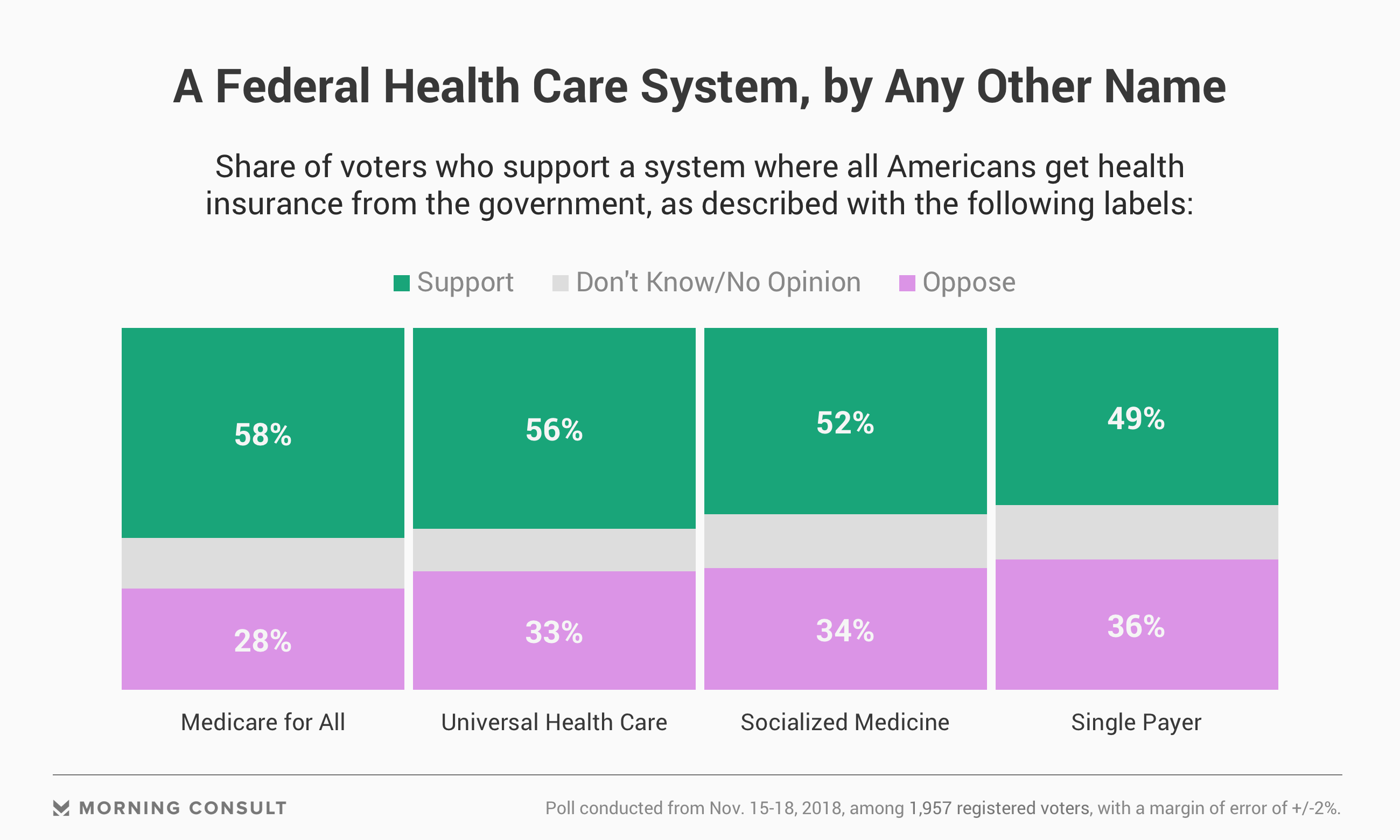
In 2018 scientists at the Mercatus Center at George Mason University carried out a research study to figure out the cost of implementing the Medicare for All Act of 2017. Opponents of single-payer health care initially commemorated the outcomes, which revealed Sanders's plan would cost $32.6 trillion over 10 years. However, Sanders reacted by noting that report's total showed cost savings of $2 trillion compared to spending forecasts without implementing reforms.
A 2003 research study in the New England Journal of Medicine found that 31 percent of United States health spending went towards unneeded administrative costs. Reducing these expenses could enable restricted resources to be utilized better. The Mercatus Center report alerts, however, that government programs tend to accrue significant administrative expenses and that government-run health care might likely sustain comparable costs, making forecasted cost savings unpredictable.
WASHINGTON (AP) The Current on the midterm elections (all times local):7 p.m. Republican politician U.S. Rep. Steve Knight has yielded the last GOP-held Home seat anchored in Los Angeles County. Democrat Katie Hill holds a 2-point lead, and Knight stated Wednesday that the citizens have spoken. Thousands of tallies remain to be counted, and The Associated Press has actually not called the race (how much would universal health care cost).
Some Ideas on What Is Fsa Health Care You Should Know
hopscotched across the post-Civil War South, attacking the makeshift camps where many thousands of newly freed African-Americans had actually taken sanctuary but leaving surrounding white communities comparatively unharmed. This pattern of condition was no mystery: In the late 1860s, doctors had yet to find infections, however they knew that bad nutrition made people more prone to illness which poor sanitation added to the spread of illness.
Smallpox was not the only health disparity facing the newly emancipated, who at the close of the Civil War dealt with a considerably higher death rate than that of whites. Despite their immediate pleas for assistance, white leaders were deeply ambivalent about stepping in. They stressed over black upsurges spilling into their own communities and wanted the formerly enslaved to be healthy sufficient to return to plantation work.
Congress developed the medical department of the Freedmen's Bureau the nation's first federal healthcare program to attend to the health crisis, but officials deployed just 120 approximately medical professionals across the war-torn South, then neglected those medical professionals' pleas for workers and devices. They set up more than 40 hospitals however too soon shuttered most of them.